

In the words of David Kelner, the current time is often described as the “fourth industrial revolution” because of the fast pace of technology progression and its penetration in all spheres of human activities. The extent of this change in technology is significant, and multiple opportunities are linked to its’ furtherance and the emergence of superior technology-capable devices like supercomputers. Numerous industries and businesses already recognize the importance of innovative solutions and are continuously assessing and developing more unique technology products to integrate them into their business operational optima.
AI is hardware or software that possesses behavioral patterns which appear intelligent
Generally, innovations are regarded as enhancements to the prosperity of human societies. However, artificial intelligence (“AI”) represents an entirely new environment as a subset of the rising technology, which is not free from resulting some effects that can disrupt the norms and peace of life. Academic studies in the field of AI suggest that it is not impossible but somewhat tricky to have a universally adopted definition for AI. Nevertheless, one aspect widely understood is that it is a system designed to perform human-like functions based on perceivable data without relying on significant human involvement or intervention.

In other words, one could say that AI is hardware or software that possesses behavioral patterns which appear intelligent. The AI’s power is that a machine can perform complicated activities that demand a complex decision-making process and involves thousands of data sets and variables. Using the experience acquired in past situations, AI makes decisions optimizing based on predictions. That is a process generally referred to as machine learning, which presupposes that AI can learn through training. Some examples include the instant access of data from a source on a portable electronic device. The use of a network of surveillance cameras to find a fugitive running through crowded places is a good example portrayed by Hollywood. Popular imagination fueled by these works of fiction has influenced how the public perceives the prowess of AI and its capabilities and use for covert operations.
However, the use of AI in a legal backdrop and other contexts might also trigger debates about the use and access of confidential data and the extent to which AI can be applied. Information has become a powerful tool in taking control of consumers’ lives and the operation of business organizations. As AI is closely tied to accessing data, a reasonable concern from the notable feature of AI is personal information extraction. The apprehension is more severe because AI can collect and analyze personal information without the data owners’ consent or knowledge. This power of AI reduces and even removes the individual’s ability to protect personal data. For example, business organizations can manipulate consumers into buying their products and/or using their services using the personal information they collect to understand preferences and determine consumers’ cognitive limitations. Without any boundaries or limitations to what and how much data can these businesses collect is precisely one big concern that privacy advocates call for and the issue has sparked ongoing debates in the big tech circles. It goes against the more recent U.S. Supreme Court cases overturning previous decisions that had denied U.S. persons their constitutionally protected privacy information. These latest decisions involve a similar pattern of facts, where individuals’ personal data was acquired by third parties, including common carriers and plausibly other digital platforms that provide essential services.

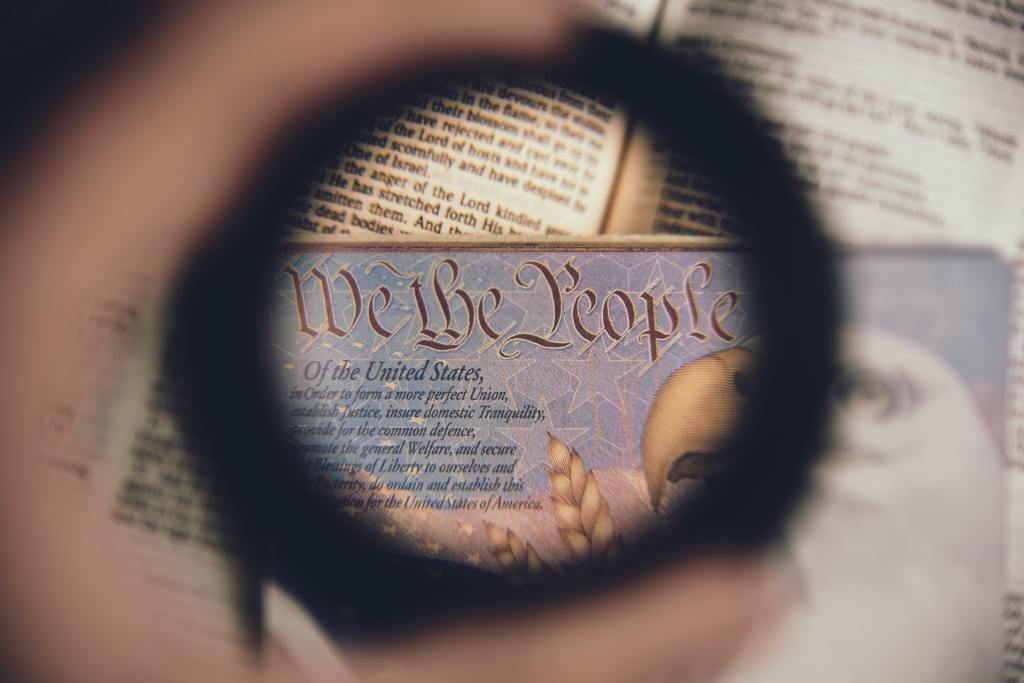
Another unique feature of AI is that it can identify patterns that individuals cannot detect themselves. This pattern recognition feature makes it difficult to distinguish between what is public and what is private. As a result, the protection against unreasonable searches and seizures guaranteed in the United States Constitution is prone to abuse. For instance, AI’s pattern recognition feature can put citizens under public surveillance, and they may no longer enjoy a reasonable expectation of privacy. Because of this, citizens can be forced to provide information to the government.
Artificial intelligence is among the most-used technology today. The evolution of technology has consequences beyond science and economics. On the one hand, AI networked economies can establish market dominance. The economy is rapidly becoming digitized because it facilitates business growth at a greater speed and improved accuracy. Altogether, AI is a technology that is still on the upward trajectory that will likely affect the current regulatory landscape. Inevitably, AI also presents some serious risks and challenges to social norms and legal standards. These apprehensions concern things like civil liberty, freedom of expression, and the right to privacy. In sum, there is still much to be done to establish robust regulatory and ethical standards for the use of AI in various environments for the overall benefit of society.
References:
[1] David Kelnar, The Fourth Industrial Revolution: A Primer on Artificial Intelligence (AI), MEDIUM, (Dec. 6, 2016), https://medium.com/mmc-writes/the-fourth-industrial-revolution-a-primer-on-artificial-intelligence-ai-ff5e7fffcae1.
[2] John D. Winkler et al., Reflections on the Future of Warfare and Implications for Personnel Policies of the U.S. Department of Defense, RAND CORPORATION (2019), https://www.rand.org/content/dam/rand/pubs/perspectives/PE300/PE324/RAND_PE324.pdf.
[3] Congressional Research Service, Artificial Intelligence and National Security, FEDERATION OF AMERICAN SCIENTISTS (Aug. 26, 2020), https://fas.org/sgp/crs/natsec/R45178.pdf.
[4] Janna Anderson et al., Artificial Intelligence and the Future of Humans, Pew Research Center (Dec. 10, 2018), https://www.pewresearch.org/internet/wp-content/uploads/sites/9/2018/12/PI_2018.12.10_future-of-ai_FINAL1.pdf.
[5]Andy Peart, Homage to John McCarthy, the Father of Artificial Intelligence (AI), (Oct. 29, 2020), https://www.artificial-solutions.com/blog/homage-to-john-mccarthy-the-father-of-artificial-intelligence.
[6] Alexander Joel, Privacy, Technology and AI, Asynchronous Recording for Global Technology Perspectives class of Spring 2021, AUWCL.
[7] Artificial Solutions Discusses Enhancing Machine Learning at World Summit AI, Artificial Intelligence, Press Release (Sep. 27, 2018), https://www.artificial-solutions.com/blog/enhancing-machine-learning-world-summit-ai.
[7] Cary J. Fukunaga, No Time to Die, James Bond Franchise, 007.com, https://www.007.com/no-time-to-die/ (last visited Feb. 14, 2021).
[8] Osonde A. Osoba et al., The Risks of Artificial Intelligence to Security and the Future of Work, RAND CORPORATION (2017), https://www.rand.org/pubs/perspectives/PE237.html.
[9] Os Keyes et al., The Government Is Using the Most Vulnerable People to Test Facial Recognition Software, SLATE (Mar. 17, 2019), https://slate.com/technology/2019/03/facial-recognition-nist-verification-testing-data-sets-children-immigrants-consent.html.
[10] Ryan Calo, Artificial Intelligence Policy: A Primer and Roadmap, 51 U.C. DAVIS L. REV. 399, 423 (2017).
[11] Deepa Seetharaman, Emily Glazer, and Tim Higgins, Facebook Meets Apple in Clash of the Tech Titans—‘We Need to Inflict Pain,’ Wall Street Journal (Feb. 13, 2021), https://www.wsj.com/articles/facebook-meets-apple-in-clash-of-the-tech-titanswe-need-to-inflict-pain-11613192406; See also, Salvador Rodriguez, Facebook Strikes Back Against Apple Privacy Change, Prompts Users to Accept Tracking to Get “Better Ads Experience,” CNBC (Feb 1, 2021), https://www.msn.com/en-us/money/other/facebook-strikes-back-against-apple-privacy-change-prompts-users-to-accept-tracking-to-get-better-ads-experience/ar-BB1dhL5f.
[12] Carpenter v. United States, 138 U.S. 2206, 2217 (2018); see also Katz v. United States, 389 U.S. 347, 351 (1967); But see United States v. Jones, 565 U.S. 400, 403 (2012).
[13] Kathleen Walch, How AI Is Finding Patterns And Anomalies In Your Data, Forbes (May 10, 2020), https://www.forbes.com/sites/cognitiveworld/2020/05/10/finding-patterns-and-anomalies-in-your-data/?sh=46855987158e.
[14] Karl Manheim & Lyric Kaplan, Artificial Intelligence: Risks to Privacy and Democracy, 21 Yale J.L. & Tech. 106, 114-115 (2019).
[15] Calo, supra note 12 at 422.
[16] Dirk Nicolas Wagner, Economic Patterns in a World with Artificial Intelligence. 17 EVOLUTIONARY INSTITUTIONAL ECON. REV. 111, 114-115 (2020).
 Art, Design, and Privacy